
Long-Distance Relationship Questions: Why the Same Question Hits Differently Over Text
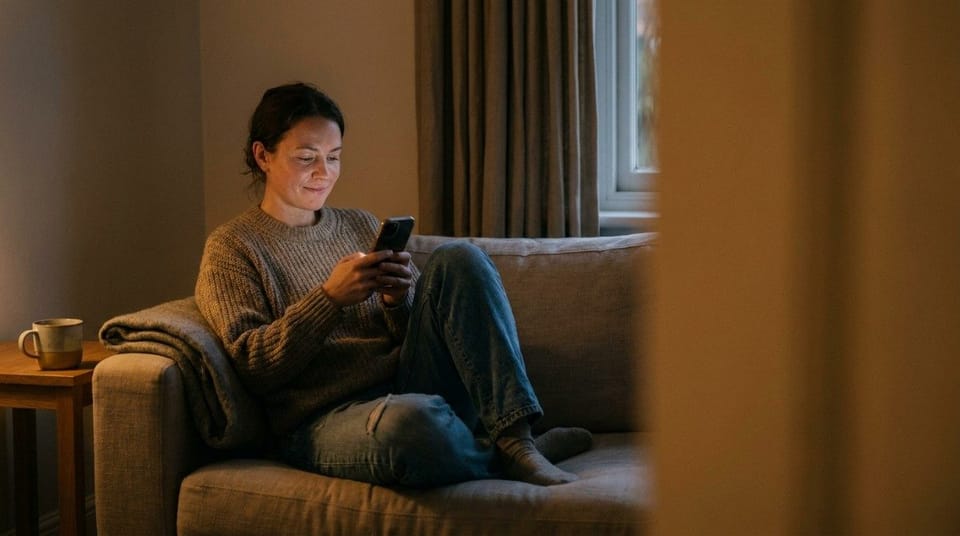
The same question that opens up a conversation across a table can flatten into a one-word reply over text, and it's rarely about the question itself. Long-distance couples don't need different questions than couples who live together. They need to account for what a screen quietly removes.
A long-distance relationship question is any question asked without the real-time tone, timing, and body language that normally help a partner know how to answer it.
Most long-distance advice focuses on which questions to ask. The bigger lever is understanding why a good question can still fall flat once it's typed instead of spoken.
TL;DR
- The same question can build closeness in person and read as flat or interrogating over text, because the medium strips out tone and timing.
- Texted questions put more interpretive weight on the reader, who has to guess at tone with no voice or face to check it against.
- A delayed reply to a heartfelt question isn't automatically disinterest. It's often just async timing doing what async timing does.
- Voice notes and video carry more of what text loses, without requiring a full scheduled call.
- Long-distance questions work best paired with context, not sent as a cold, standalone prompt.
- Skip text-based deep questions when either partner is mid-task, distracted, or clearly in a rushed exchange.
What Is a Long-Distance Relationship Question, and How Is It Different?
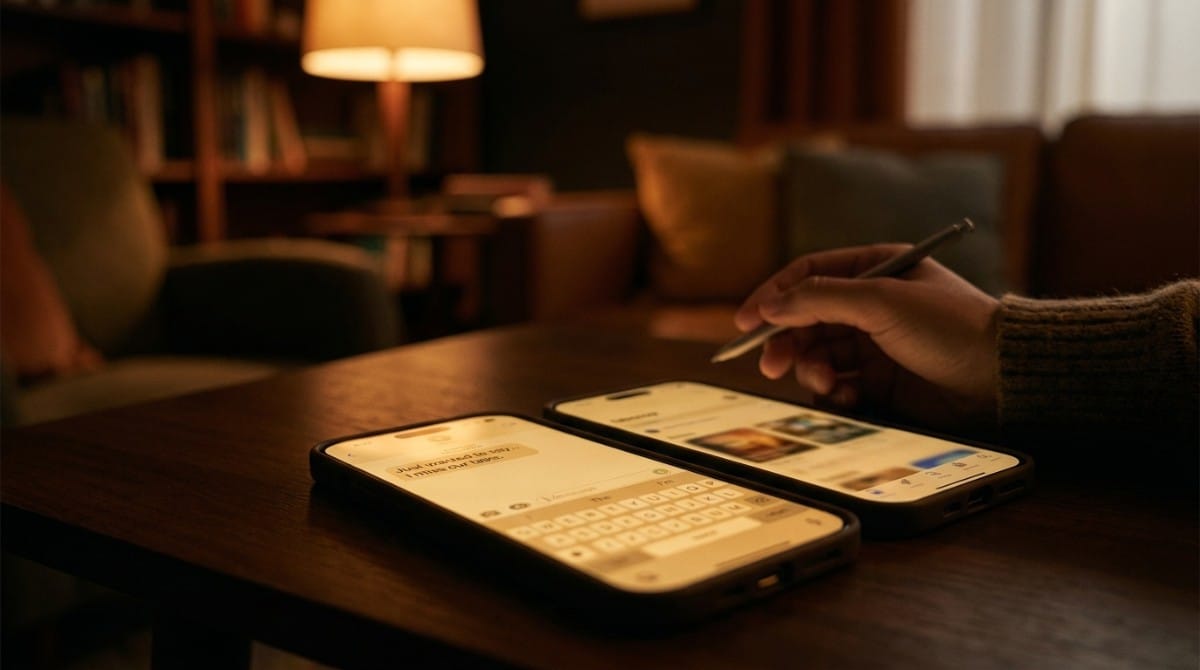
A long-distance relationship question carries the same content as any other couples question. What changes is delivery. There's no face to read, no pause you can hear, no chance to soften a follow-up in real time if it lands wrong.
That gap matters more than most couples expect. This is really a specialized case of how long-distance couples build emotional intimacy without physical touch: the tools that normally carry meaning, tone, timing, and touch, are all removed at once, and questions have to work harder to compensate.
Good long-distance relationship questions aren't more emotional than in-person ones. They're built with the missing context in mind.
Why Does the Same Question Feel Different Over Text Than In Person?
In person, a question and its answer happen inside a shared moment. Confusion gets caught and repaired instantly, a raised eyebrow gets a quick "no, I meant it differently." Over text, that repair loop disappears.
Instead, both partners are filling in blanks. A short reply gets read as distant. A slow reply gets read as avoidance. Neither might be true, but without tone or timing to check against, the anxious interpretation tends to win by default.
This is also where a lot of couples communication breaks down without either partner doing anything wrong. The question was fine. The format just asked more of it than it could carry alone.

The Psychology Behind Why Text Removes the Safety Net a Real Conversation Has
Communication research consistently emphasizes that tone and pacing carry a large share of a message's emotional meaning, not just the words themselves. Text removes both. What's left is a sentence with no voice attached to it, which the reader has to supply from imagination, usually shaped by however they're already feeling that day.
🔑 Key Insight: A long-distance question doesn't fail because it was the wrong question. It fails when it's sent with the same assumptions as a face-to-face one, expecting the reader to catch tone that was never actually there.
Statistics & Research Insight
Long-distance relationship research consistently finds that communication quality, not frequency, predicts relationship satisfaction and stability. Couples who compensate for the missing nonverbal channel, through voice notes, video, or simply more context in their messages, tend to report feeling closer than couples who rely on volume of texting alone to bridge the gap.
How to Ask Long-Distance Questions So They Actually Land

Quick Framework: Designing Questions for Distance
- Add context before the question. "Been thinking about us lately, curious about something" lands differently than the question cold.
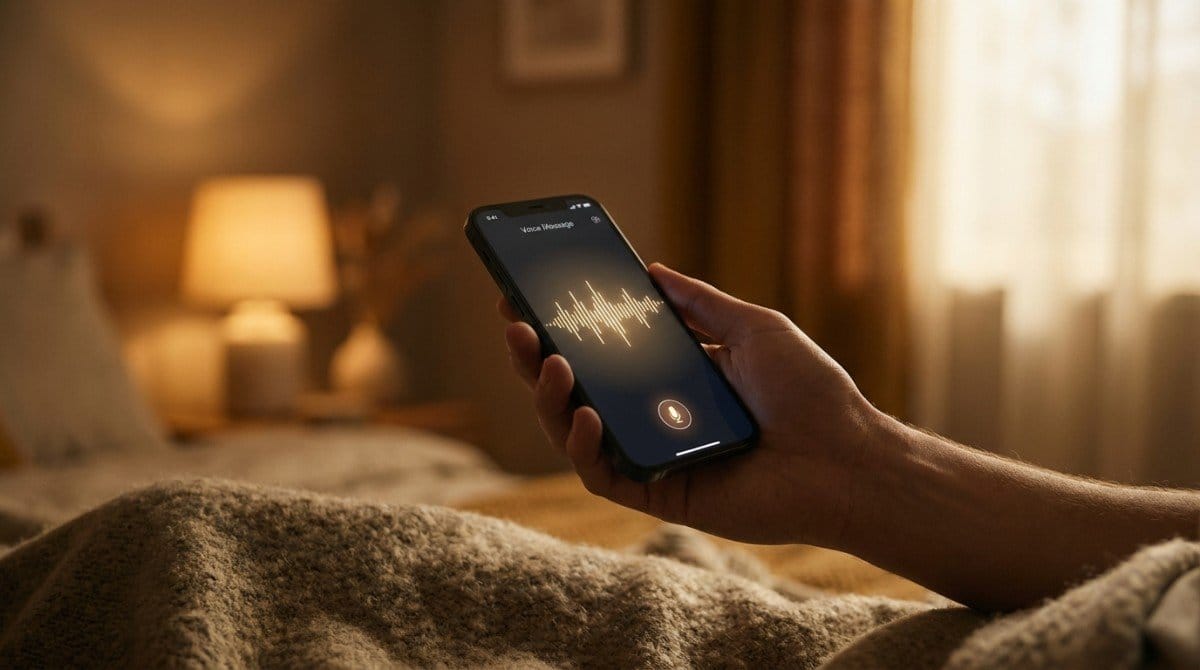
- Send it as a voice note when it matters. Tone does half the work text can't.
- Don't read a delayed reply as an answer. Distance changes timing, not necessarily intent.
- Ask one question at a time. A string of texted questions reads as a checklist, the same problem covered in why question games start to feel like homework, just worse over text because there's no pacing cue to slow it down.
- Follow up out loud when you can. A text question that gets a short answer is a good candidate for a call, not a rephrase.
| Text Question | Voice or Video Question | |
|---|---|---|
| Tone | Has to be guessed | Carried in the delivery |
| Repair if misread | Delayed, often never happens | Immediate |
| Best for | Light, low-stakes check-ins | Anything with real emotional weight |
| Risk | Easy to misread as flat or distant | Requires more coordination |
This is exactly the gap Flamme's long-distance tools were built to close: pairing a daily question with the option to answer by voice, so tone doesn't get lost just because you're apart. If you're not sure how your partner naturally processes a question like this, out loud versus in writing, the Type of Lovers quiz is a quick way to find out instead of guessing from a flat reply.
What Happens If You Keep Treating Text Like a Face-to-Face Conversation?
Nothing breaks after one misread text. What builds is a quiet pattern: questions that used to feel warm start to feel like a test, because a few too many got read the wrong way with no chance to correct it in the moment.
Over time, this is part of what's actually happening in what to do when your long-distance partner stops initiating conversations. It's rarely that the questions stopped mattering. It's that enough of them landed wrong, without repair, that asking started to feel riskier than staying quiet.
Pairing text with a consistent, lower-stakes rhythm, the kind described in the daily habits that keep long-distance love alive, tends to prevent this before it starts, because one small question a day carries far less room for misread than an occasional heavy one.
When NOT to Use This
- Don't send a heavy question right before either partner has to go into a meeting, class, or something else they can't respond to properly.
- Don't stack several questions into one message. It reads as an interrogation, not curiosity.
- Don't interpret a slow reply as an answer in itself. Ask, don't assume.
- Don't use text for a conversation that actually needs repair in real time, like anything tied to a recent conflict.
Final Takeaway
Long-distance questions don't need to be bigger or more emotional to work. They need to be built for the medium they're traveling through. Add context, use voice when it matters, and give delayed replies the benefit of the doubt. The question was probably fine. It just needed a little more than text alone could carry.

Knowing why a question landed wrong doesn't fix the habit of sending it the same way next time. That takes a different default, not just better intentions in the moment.
Passive advice about "communicating more" rarely survives a busy week. What actually closes distance is a small, consistent ritual that carries tone with it, not just words.
Flamme is a guided system for daily relationship rituals, with long-distance connection tools built specifically for what text alone can't carry.
- A daily question with the option to answer by voice, so tone travels with the words.
- Emotional check-ins that catch a misread moment before it turns into a pattern.
- A Type of Lovers profile for each partner, so you know whether they process a hard question best out loud or in writing.
If you're not sure how your partner naturally answers questions like this, the Type of Lovers quiz is a fast way to find out.
Download Flamme and keep tone in the conversation, even across the distance.
FAQ
Why does the same question feel different over text than in person? Text strips out tone, timing, and the chance to repair a misread moment in real time, so the reader has to guess at tone instead of hearing or seeing it.
Is a slow reply to a deep question a bad sign in a long-distance relationship? Not usually. Distance changes timing, not necessarily intent. A delayed reply is often about circumstance, not disinterest.
Should long-distance couples ask questions over text or voice? Light, low-stakes check-ins work fine over text. Anything with real emotional weight lands better as a voice note or video, where tone can travel with the words.
How many questions should you send at once over text? One. Stacking several questions into a single message tends to read as a checklist or interrogation rather than genuine curiosity.
What's the biggest mistake long-distance couples make when asking questions? Treating a texted question exactly like a face-to-face one, then reading a flat or delayed reply as the final answer instead of a limitation of the format.