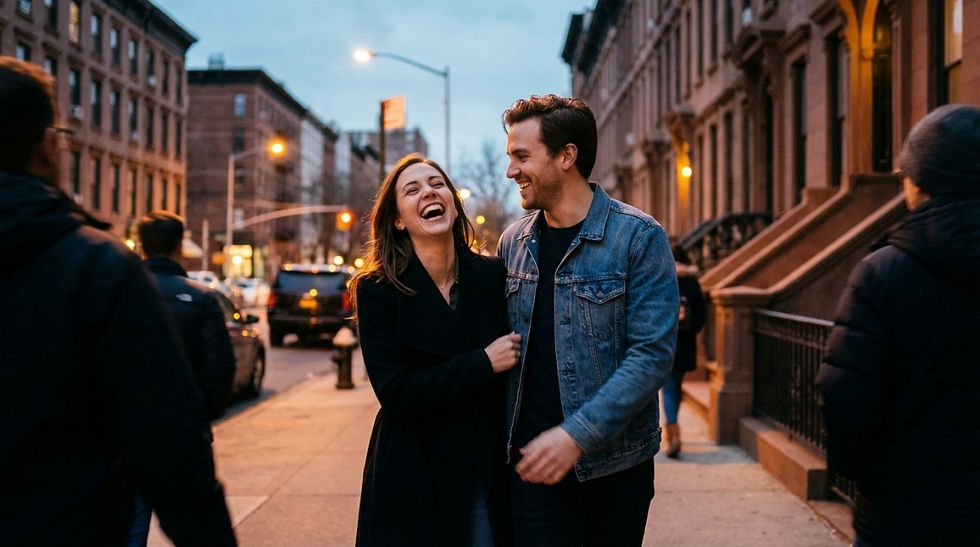
Why Do Couples Look Alike? The Psychology Behind the Pattern
- Parveen Kushwaha
- 5 hours ago
- 8 min read

Couples really do tend to resemble each other - and science has been quietly confirming this for decades. It is not a coincidence, a fluke, or a joke about matching outfits. It is the result of layered psychological, biological, and social forces that shape who we are drawn to and who we gradually become alongside.
Why couples look alike is explained by a combination of assortative mating (the subconscious attraction to familiar-looking faces), shared environmental convergence, and behavioral mirroring that physically aligns partners over time.
TL;DR
We are subconsciously drawn to faces that feel familiar, often resembling our own
This is called assortative mating, a well-documented psychological and biological pattern
Couples from similar environments also share diet, lifestyle, and habits, which shapes appearance
Over time, behavioral mirroring causes partners to develop matching expressions, posture, and even wrinkle patterns
This convergence is associated with higher relationship satisfaction
Looking alike is a side effect of deep emotional bonding, not a requirement for it
Understanding why this happens can reveal a lot about the invisible forces shaping your relationship

What Is the "Couples Look Alike" Phenomenon?
The observation that romantic partners often share physical features has been documented across cultures and age groups. It is not just that people dress similarly after years together.
Researchers have found measurable facial similarity between couples that goes beyond shared fashion or grooming.
This happens at three distinct levels: who we are initially attracted to, who we end up with after spending time in shared environments, and how we physically converge over years of shared life.
Each layer operates through a different mechanism. Together, they explain why you and your partner may have been mistaken for siblings, and why that might actually signal something meaningful about the depth of your bond.
Why Does Familiarity Drive Attraction in the First Place?
The human brain uses familiarity as a proxy for safety.
From an early age, the faces we see most often - family members, close friends, people from our neighborhood - become the emotional baseline for what feels comfortable and trustworthy. When we encounter a stranger who shares those facial features, the brain registers a subtle signal: this person feels known.
Research on facial attractiveness consistently shows that faces rated as more attractive tend to be more "average" and more familiar-looking, not necessarily more symmetrical or conventionally beautiful. The more a face resembles faces we have already processed and felt safe around, the more appealing it registers.
This is why people often find themselves attracted to partners who have similar facial bone structure, eye spacing, or even subtle expressions to their own. It is not narcissism. It is the brain's pattern-recognition system running quietly in the background.
The Role of Assortative Mating
Psychologists use the term assortative mating to describe the documented tendency of people to partner with others who are similar to them - physically, genetically, socioeconomically, and cognitively.
Research at Stanford University found measurable facial resemblance between romantic partners that exceeded what random pairing would produce. The study suggested this similarity could be driven by both conscious preference and subconscious evolutionary cues signaling genetic compatibility.
Similarity Type | Mechanism | Evidence Strength |
Facial features | Subconscious familiarity preference | High |
Genetic markers | Assortative mating / evolutionary cues | Moderate-High |
Socioeconomic background | Shared environment proximity | High |
Behavioral patterns | Mirroring and shared habits | High |
Cognitive style | Value alignment and personality match | Moderate |
This is not just a quirky side note. It reflects how deeply attraction is shaped by invisible psychological architecture rather than deliberate choice.

How Do Shared Environments Shape Physical Similarity?
Attraction is only the starting point.
Once two people form a relationship, they begin sharing environments, and environments shape bodies. A couple who lives together in the same city, eats at the same restaurants, exercises together, sleeps on the same schedule, and adopts each other's routines will gradually develop similar physiological profiles.
Shared diet influences skin quality, weight distribution, and energy levels. Shared sleep patterns affect under-eye appearance and skin tone. Shared exercise habits change muscle definition and posture. Shared stress levels influence how the face holds tension.
None of this is dramatic in any single week. But across years, it compounds.
What Happens If Couples Have Very Different Lifestyles?
When partners diverge significantly in lifestyle - one very active, the other sedentary; one focused on nutrition, the other indifferent - the physical convergence slows or reverses.
This is worth noting because physical divergence in a long-term relationship is sometimes an early signal of lifestyle misalignment, not just aesthetic difference. It reflects increasingly separate daily rhythms, which can quietly increase emotional distance.
Couples who share intentional daily rituals - even small ones like morning coffee together, evening walks, or cooking the same meals - tend to maintain both physical and emotional closeness more effectively. This is one reason structured relationship rituals matter more than most people realize.
Why Do Couples Start to Mirror Each Other's Expressions Over Time?
The most fascinating layer of this phenomenon is behavioral mirroring - and it is the mechanism most directly connected to emotional intimacy.
When two people spend significant time together and feel emotionally safe with each other, their nervous systems begin to synchronize. This shows up as unconsciously matching body language, adopting similar gestures, finishing each other's sentences, and - most visibly - developing matching facial expressions.
Over years, repeated facial expressions physically shape the face. The same muscles used frequently develop more prominently. Wrinkle patterns follow the paths of most-used expressions. Two people who laugh together the same way, furrow their brows in the same situations, or soften their faces in the same moments of tenderness will gradually look more alike in the places where expression lives.
A landmark study by Robert Zajonc found increased facial resemblance in couples after 25 years of cohabitation. Crucially, the couples who showed the most convergence also reported the highest relationship satisfaction. The physical similarity was not the cause of happiness - it was a reflection of how deeply their emotional lives had intertwined.
🔑 Key Insight: Mirroring is not imitation. It is the physical residue of genuine emotional attunement. When couples look alike, they are often showing you the accumulated evidence of thousands of moments of real connection.

The Three-Stage Model of Physical Convergence in Couples
Understanding why couples look alike is easier through a staged framework:
Stage 1 - Initial Attraction (Pre-relationship) Subconscious familiarity bias draws people toward partners with similar facial characteristics. Assortative mating patterns and shared social environments increase the likelihood of proximity to similar-looking people.
Stage 2 - Environmental Convergence (Early to Mid Relationship) Shared diet, sleep, exercise, stress, and daily routines begin physically aligning partners. Skin quality, weight distribution, and posture start reflecting shared lifestyle.
Stage 3 - Behavioral Mirroring (Long-term) Unconscious mirroring of expressions, gestures, and speech patterns leaves physical marks on the face over time. Couples develop matching wrinkle patterns, similar resting expressions, and synchronized body language.
Each stage deepens the previous one. A couple who shares strong emotional intimacy will move through all three stages more visibly and more quickly.
What Does It Mean If You and Your Partner Do NOT Look Alike?
Physical resemblance is a side effect of bonding, not a prerequisite for it.
Not all couples experience visible convergence, and this does not indicate a weaker relationship. Genetic diversity, vastly different cultural backgrounds, significant age gaps, or simply low emphasis on shared physical routines can all reduce visible similarity without affecting emotional depth.
What matters more is whether the underlying mechanisms are present: shared experiences, intentional time together, emotional attunement, and consistent communication.
When NOT to Use This Framework
Do not use the "couples look alike" theory as a compatibility test. Do not interpret physical dissimilarity as a warning sign. Do not assume a couple is more connected simply because strangers mistake them for siblings.
This phenomenon is descriptive, not prescriptive. It tells you something interesting about how bonding works - it does not tell you whether a specific relationship is healthy.
Statistics & Research Insight
A Stanford University study found measurable facial resemblance in romantic couples beyond chance probability
Robert Zajonc's cohabitation study showed increased apparent similarity after 25 years, with higher similarity correlating to higher relationship satisfaction
Research on assortative mating documents partner similarity across physical features, intelligence, values, and socioeconomic background at rates significantly above random
Studies on facial attractiveness show familiarity (not symmetry alone) is a primary driver of perceived attractiveness
Behavioral mirroring research confirms unconscious synchronization of gestures, expressions, and even physiological responses (heart rate, breathing) in emotionally close couples

Final Takeaway
Couples look alike because attraction, environment, and emotional intimacy all leave physical traces.
The subconscious draws you toward familiar faces. Shared life shapes your body in parallel. And years of genuine emotional connection leave matching marks on the faces that have spent thousands of hours expressing the same feelings together.
It is, in a quiet way, one of the most beautiful things science has confirmed about long-term love: the evidence of deep bonding is written on the body itself.
Want to Actually Understand Your Relationship's Bonding Patterns?
Reading about why couples converge is useful. But knowing the specific emotional and psychological patterns that shape your relationship is a different level entirely.
Most couples develop their connection patterns passively - through proximity, habit, and time. What research increasingly shows is that intentional connection rituals accelerate bonding significantly more than passive cohabitation alone.
This is exactly what Flamme is built around.
Flamme is a guided relationship ritual system that gives couples a structured way to build emotional intimacy daily - not just on anniversaries or during conflict, but as a consistent practice woven into ordinary life.
With Flamme, couples get:
Daily conversation prompts that spark meaningful exchanges beyond "how was your day"
Emotional check-in tools that help partners understand each other's inner state in real time
Long-distance bonding features that maintain closeness across physical separation
If you want to understand your own emotional bonding style before diving in, the Type of Lovers quiz is a research-informed starting point. It maps your relationship personality - how you connect, what you need, and where friction tends to come from.
The couples who look most alike after decades together did not get there by accident. They got there through thousands of small moments of genuine attention. Flamme is built to help you create those moments deliberately.
Frequently Asked Questions
Q1: Why do couples look alike?
Couples look alike due to a combination of assortative mating (attraction to familiar-looking faces), shared environments that physically align partners over time, and behavioral mirroring that leaves matching expression patterns on both faces after years of emotional connection.
Q2: Is it normal for couples to resemble each other?
Yes, it is a well-documented psychological and biological pattern. Not all couples show visible similarity, but research consistently finds measurable resemblance between partners at rates above random chance - particularly in long-term relationships.
Q3: Do couples look more alike over time?
Yes. Research by Robert Zajonc found increased facial similarity in couples after 25 years of cohabitation, driven by shared lifestyle, diet, and behavioral mirroring of expressions and gestures.
Q4: What does it mean when strangers think you and your partner are siblings?
It often reflects deep emotional attunement - matching expressions, synchronized body language, and similar lifestyle habits have gradually aligned your appearance. Research suggests this level of convergence correlates with high relationship satisfaction.
Q5: Does looking alike mean you are more compatible?
Not necessarily. Physical resemblance is a side effect of bonding patterns, not a predictor of compatibility. Emotional intimacy, shared values, and effective communication are far stronger indicators of relationship health.