
Why Long-Distance Couples Drift Apart (and How to Stop It)


Long-distance relationships do not usually end in a single dramatic moment. They erode - quietly, gradually, and often without either partner fully noticing until the distance between them feels less like miles and more like something harder to name.
Long-distance relationship drift is the gradual emotional and physical disconnection that occurs when couples are separated by geography and fail to replace the bonding mechanisms that proximity naturally provides.
TL;DR
- Physical separation removes the everyday micro-moments that quietly sustain emotional intimacy
- Without shared experiences, partners begin growing on separate paths - becoming different people without realizing it
- Communication quantity often stays high while communication quality quietly drops
- The absence of nonverbal cues (touch, expression, body language) creates a chronic intimacy gap
- Independent personal growth, when not shared, becomes emotional divergence over time
- Drift is not inevitable - but it requires intentional effort to counter, not just frequent texting
- Structured connection rituals are the most effective documented antidote to LDR drift

What Is Long-Distance Relationship Drift?
Drift in a long-distance relationship is not the same as falling out of love. It is what happens when the structural conditions that normally sustain a relationship - shared space, daily physical presence, spontaneous interaction - are removed, and nothing intentional is put in their place.
When partners go through life experiences separately, those experiences change them. In relationships with physical proximity, partners grow and change together. In long-distance relationships, this change often happens independently for each person.
The result is two people who still care about each other but are increasingly living in separate emotional worlds - worlds with different daily rhythms, different social circles, different stressors, and gradually different versions of themselves.
Why Does Physical Separation Create Emotional Distance?
The connection between physical proximity and emotional intimacy is not sentimental - it is neurological.
Human bonding is built substantially on nonverbal communication. A touch on the arm during a difficult conversation. A glance across the room. The unconscious mirroring of a partner's posture when they are stressed. The thousand small physical gestures that say I see you without a single word.
When couples cannot see each other often, it becomes much harder to pick up on nonverbal signals that convey emotion - facial expressions, body language, and physical cues that in-person presence naturally provides. Without these signals, misinterpretations become more likely, and conflict that could have been avoided in person becomes harder to navigate digitally.
This is not a communication failure. It is a structural one. The tools available to long-distance couples - text, voice notes, video calls - are genuinely valuable, but they transmit a fraction of the emotional bandwidth that physical presence carries.
The Intimacy Gap
Research confirms that partners who live far apart tend to have fewer opportunities for both physical and sexual intimacy than couples who live together or nearby. Studies in interviews
with long-distance partners show that they report feeling less closeness and intimacy when apart, alongside increased loneliness and, in some cases, jealousy.
Over weeks and months, this chronic gap compounds. Each partner begins filling the space with solo routines, solo friendships, solo growth. Neither intends to drift. But without active countermeasures, drift is the default outcome of separation without structure.

How Independent Growth Becomes Emotional Divergence
One of the most underestimated causes of LDR drift is not conflict or communication breakdown - it is personal growth happening in parallel rather than together.
The real issue is not that partners change - it is whether they change together or in parallel. Problems arise when growth happens without communication, curiosity, or shared meaning.
In a long-distance relationship, both partners are navigating daily life without the other present. New friendships form. Career pressures shift identity. Hobbies evolve. Small revelations happen on solo Tuesday evenings that never make it into conversation.
Each of these is individually insignificant. Accumulated across months or years, they create two people who have been running on separate tracks - still facing each other across the distance, but no longer on the same path.
What Happens If Growth Is Never Shared?
When partners stop narrating their inner lives to each other - not just the events, but the meaning they are making of those events - emotional intimacy quietly hollows out. The relationship continues to look functional from the outside. Calls happen. Messages are sent. But the depth of mutual knowing that defines real emotional closeness stops growing.
What couples need is not identical interests or growth paths but emotional access - the ability to share who they are becoming and feel met with genuine interest, respect, and care.
This is the real failure mode of long-distance drift. Not absence. Not distance. The loss of emotional access.
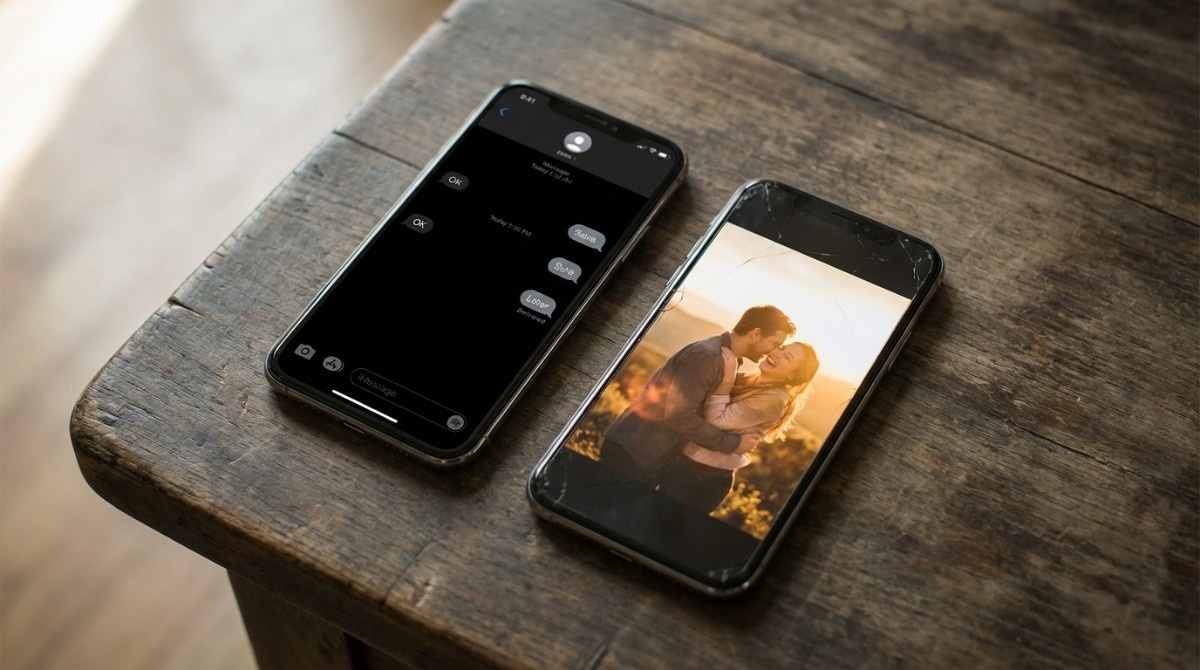
The 4 Mechanisms Behind LDR Drift
Understanding why drift happens makes it preventable rather than inevitable.
Mechanism
What It Removes
How Drift Develops
Loss of physical proximity
Touch, nonverbal bonding, micro-moments
Chronic intimacy gap widens over time
Parallel independent growth
Shared meaning-making, identity alignment
Partners become different people separately
Communication quality decline
Depth, emotional vulnerability, curiosity
Exchanges become informational not connective
Absence of shared rituals
Predictable closeness, relationship momentum
Relationship loses its forward motion
Each mechanism feeds the others. Communication quality drops partly because there are fewer shared experiences to draw from. Shared rituals become harder to maintain because parallel lives create scheduling friction. Physical distance amplifies the emotional weight of every unresolved misunderstanding.
The routine of daily communication in long-distance relationships may focus on exchanging information rather than creating meaningful moments together. Shared experiences are essential for building emotional bonds - if partners neglect to engage in activities that bring joy, laughter, and genuine connection, even remotely, the relationship can begin to feel monotonous and less fulfilling.
Why Communication Quantity Is Not the Same as Connection
Most long-distance couples believe that staying in frequent contact is the primary defense against drift. It is necessary but not sufficient.
There is a difference between contact and connection. Contact is informational: what happened today, what is for dinner, what time is the call tomorrow. Connection is emotional: how are you actually feeling, what are you afraid of right now, what did today change about how you see things.
Affection tends to fade not through one dramatic argument but through the gradual loss of the everyday gestures that once signaled care. When small interactions - once a private shorthand for intimacy - begin carrying a more mechanical tone guided by function rather than desire, emotional distance follows.
In long-distance contexts, the mechanical drift is accelerated because there is no physical presence to compensate. When an in-person couple has a flat, transactional conversation, they might still feel connected through a shared meal or a quiet hour on the same couch. Long-distance couples have only what the conversation itself delivers.
🔑 Key Insight: Connection quality in long-distance relationships must be actively designed, not just maintained. A daily 20-minute call built around emotional depth will do more for relationship health than two hours of passive parallel-presence video calls.
A Quick Framework: How to Counter LDR Drift Before It Sets In
Step 1 - Audit your current communication quality Are your conversations predominantly informational? How often do you discuss feelings, fears, growth, and inner experience rather than logistics and events?
Step 2 - Build at least one weekly ritual that creates shared experience Virtual movie nights, cooking the same recipe simultaneously, reading the same book, playing an online game together - the specific activity matters less than the reliable shared moment it creates.
Step 3 - Narrate your inner life, not just your outer one Make it a habit to share the meaning you are making of experiences, not just the experiences themselves. "Today made me realize I care a lot more about X than I thought" opens connection. "Today was fine, work was busy" closes it.
Step 4 - Name your growth to each other When you change, tell your partner. When they change, get curious about it. Asking questions like "How are you different today than you were a year ago?" invites connection rather than distance.
Step 5 - Protect the relationship's forward motion Have a shared future orientation. Know when you will next see each other. Have a rough sense of where the relationship is heading. Uncertainty about the future amplifies the emotional weight of present distance.
When NOT to Use This Framework
Do not use the drift framework as a blame structure. If a long-distance relationship is struggling, it does not mean one or both partners failed to try hard enough. It means the structural conditions were working against the relationship and the tools available did not match what was needed.
Do not try to over-engineer every conversation. Forcing emotional depth into every interaction creates pressure that itself erodes intimacy. Some calls can just be easy and light.
Do not assume that planning a visit solves drift. Physical reunions are important but they do not reset the emotional distance that has built up in the intervals. The work happens in the between-times, not just during visits.
Statistics & Research Insight
- Studies estimate that approximately one-third of college students are in a long-distance relationship at any given time
- Research suggests that in long-distance relationships, some form of idealization of the partner can occur - partners who do not see each other in everyday situations may maintain a more positive image, which can create a gap between expectation and reality during visits
- A study by Sara Mietzner and Lin Li-Wen found that long-distance relationship couples developed significant relational skills including trust, patience, and higher-quality communication - suggesting LDRs can build strengths that proximity-based relationships sometimes do not
- Research by Dr. Sue Johnson in Emotionally Focused Therapy identifies secure attachment as the foundation of resilient communication - and notes that digital communication, while valuable, is particularly vulnerable to attachment-based misunderstandings
- Common reasons LDRs fail include lack of communication quality, difficulty maintaining emotional connection, unrealistic expectations, limited physical intimacy, and absence of a shared future plan

Final Takeaway
Long-distance drift is not a sign that the love is gone. It is a sign that the structural supports love depends on - proximity, shared experience, nonverbal attunement, mutual growth - have been reduced, and nothing intentional has been built to replace them.
The couples who sustain real emotional closeness across distance are not the ones who call more often. They are the ones who have learned to create connection deliberately - through shared rituals, honest inner narration, and a genuine curiosity about who their partner is becoming.
Distance tests a relationship's infrastructure, not its heart. Build the infrastructure.
The Real Problem Isn't the Distance - It's the Absence of Structure
Most long-distance couples work hard. They schedule calls. They send good morning messages. They plan visits.
What most do not have is a consistent system for the deeper layer - the emotional intimacy, the inner life sharing, the daily rituals that make a relationship feel genuinely alive rather than maintained.
This is precisely what Flamme is designed for.
Flamme is a guided relationship ritual app built to help couples create real connection daily - not just logistical check-ins, but the kind of meaningful exchanges that keep two people genuinely known to each other across any distance.
For long-distance couples specifically, Flamme offers:
- Daily conversation prompts that go far beyond "how was your day" - designed to surface the inner life sharing that drift quietly kills
- Long-distance bonding tools built specifically to help couples maintain emotional closeness and shared momentum between visits
- AI relationship coaching that helps couples navigate the specific friction points that distance amplifies
If you want to understand your own emotional connection style before getting started, the Type of Lovers quiz maps how you connect, what you need emotionally, and where your communication patterns may be creating invisible distance.
The couples who make long-distance work do not leave connection to chance. They build it deliberately, every day.
👉 Download Flamme and grow closer every day
Frequently Asked Questions
Q1: Why do long-distance couples drift apart? Long-distance couples drift apart because physical separation removes the everyday proximity-based bonding mechanisms - touch, nonverbal cues, spontaneous shared experience - that sustain emotional intimacy. Without intentional replacements, partners grow on separate paths without realizing it.
Q2: Is drifting apart in a long-distance relationship inevitable? No. Drift is the default outcome of separation without structure, not an inevitable one. Couples who build consistent connection rituals, share their inner growth with each other, and maintain a shared future orientation can sustain strong emotional intimacy across distance.
Q3: How do you know if you're drifting apart in a long-distance relationship? Key signs include conversations becoming primarily logistical, less curiosity about each other's inner life, increasing comfort with longer gaps between contact, and a growing sense that your partner does not fully know who you currently are.
Q4: What is the biggest mistake long-distance couples make? Prioritizing communication quantity over communication quality. Frequent contact maintains presence but does not build the emotional depth that prevents drift. What matters is the quality of emotional sharing within those conversations, not just their frequency.
Q5: Can a long-distance relationship recover after emotional drift? Yes, but it requires both partners to acknowledge the gap and commit to rebuilding intentionally rather than just increasing contact frequency. Structured rituals, honest conversations about personal growth, and shared experiences - even virtual ones - are the most effective paths back to genuine closeness.