The Honeymoon Phase Is Over - Now What?


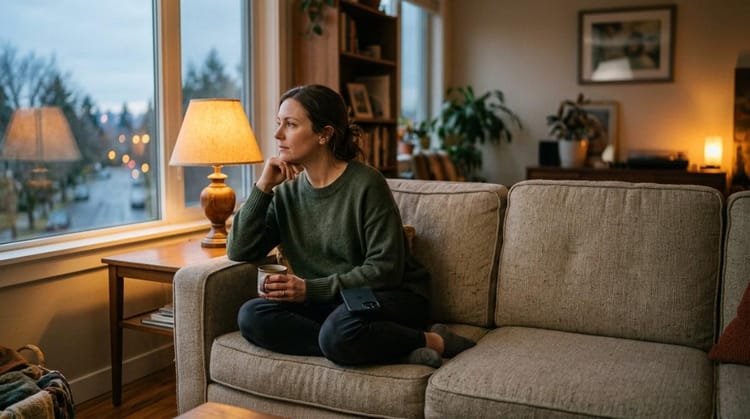
The moment the honeymoon phase ends tends to feel like something breaking. The intensity softens. The novelty fades. You stop reaching for your phone every five minutes. And somewhere in that quiet, a question surfaces: Is something wrong with us?
Usually, no. What you're experiencing is one of the most misunderstood transitions in relationship psychology - and one of the most commonly misread as failure.
The honeymoon phase ending is the neurochemical normalization that follows early-stage romantic bonding, signaling a shift from infatuation-driven connection to the deeper, more durable architecture of long-term attachment.
TL;DR
- The honeymoon phase is neurochemically real - driven by dopamine, oxytocin, and norepinephrine surges that are biologically temporary.
- When intensity fades, most couples mistake neurological normalization for emotional disconnection.
- The post-honeymoon phase is when genuine compatibility either emerges or doesn't - it's a diagnostic window, not a death sentence.
- "Falling out of the honeymoon phase" and "falling out of love" are not the same thing.
- Couples who build intentional connection rituals after the honeymoon phase ends sustain intimacy far more effectively than those who rely on chemistry alone.

What Is the Honeymoon Phase - and Why Does It End?
The honeymoon phase is the early period of a romantic relationship characterized by heightened emotional intensity, idealization of the partner, and an almost compulsive focus on the connection. It typically spans the first few months to roughly 12-18 months of a relationship, though the timeline varies significantly between individuals and couples.
It ends because it was always designed to.
The neurochemistry driving that initial intensity - particularly dopamine (novelty and reward), norepinephrine (excitement and hyperawareness), and elevated oxytocin (bonding and attachment) - operates on a burst system. These hormonal surges are the brain's mechanism for initiating pair bonding. They are not built for sustained indefinite activation.
As explored in the neuroscience of falling in love, this early phase suppresses critical evaluation, amplifies positive perception of the partner, and creates a feedback loop of excitement that feels, while it lasts, like irrefutable evidence of compatibility. The brain during this phase is running a very specific program - and when that program completes, the experience shifts.
This is not a malfunction. It is the biological transition from attachment initiation to attachment consolidation.
Why Does the End of the Honeymoon Phase Feel Like Loss?
Because for the duration of that phase, your brain set a new emotional baseline.
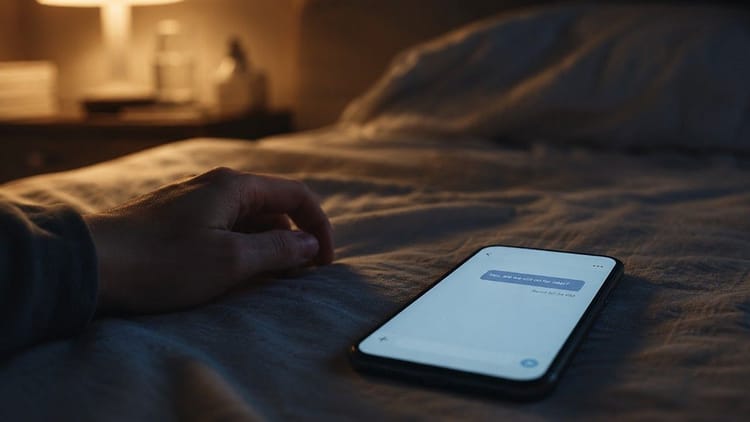
Intensity became the reference point for what love feels like. So when it naturally normalizes - when you stop getting the dopamine hit every time you see their name on your phone, when the silence between you stops crackling with anticipation - the contrast reads as absence.
You're not feeling less. You're feeling differently. But the brain interprets the reduction in neurochemical intensity as a reduction in the relationship itself.
This is where most couples make one of two costly errors.
The first: they assume something is wrong with the relationship and begin looking for an exit or introducing unnecessary conflict to recreate stimulation. The second: they quietly accept the fade, stop investing actively, and allow genuine disconnection to develop where only neurological normalization actually existed.
Both responses treat a normal developmental transition as evidence of a problem - and both can create the problem they're trying to diagnose.

What Actually Happens After the Honeymoon Phase Ends
💡 Key Insight: The post-honeymoon phase is not the end of connection - it's the first real test of whether connection exists beneath the chemistry.
What replaces the neurochemical surge, in a healthy relationship trajectory, is something psychologists call companionate love - a more stable, less volatile form of attachment characterized by deep familiarity, emotional security, and sustained care. It is quieter than infatuation. It is also significantly more resilient.
Research on long-term relationship satisfaction consistently shows that couples who successfully navigate the honeymoon-to-stability transition report higher relationship quality over time than those who repeatedly cycle through the early-intensity phase across different partners.
The transition also reveals what the relationship is actually built on. During the honeymoon phase, the neurochemical environment conceals incompatibilities, smooths over friction, and makes most interactions feel meaningful regardless of their actual content. When it ends, you see more clearly.
This is why the psychological shift from dating to relationship matters so much - the post-honeymoon period is often when that shift either deepens or stalls.
What Changes - and What It Means
Experience
During Honeymoon Phase
Post-Honeymoon Reality
Attraction
Intense, almost constant
Present but contextual and chosen
Conflict
Rare or quickly dissolved by chemistry
More visible; reveals communication patterns
Silence
Charged, anticipatory
Comfortable or uncomfortable - a real signal
Future talk
Abstract and exciting
Concrete and collaborative - or avoided
Effort
Feels effortless (neurochemical assist)
Requires genuine intention
Emotional safety
Assumed
Built or not built
How to Know If the Honeymoon Phase Is Actually Over (vs. Something Else)
Not every shift in intensity signals healthy normalization. Sometimes a genuine disconnection is developing, and it's worth knowing the difference.
Normal post-honeymoon signs:
- Comfort and ease replace constant excitement
- You can be boring together without anxiety
- Conflict feels more real but gets resolved
- Affection becomes more quiet and specific rather than generalized
- You see each other's ordinary self and still choose to be there
Signs something more significant may be happening:
- You feel consistently unseen or misunderstood
- Conflict doesn't resolve - it just stops
- Physical or emotional distance is growing without being addressed
- One or both partners have stopped investing in micro-moments of connection - the small daily habits that sustain closeness
- You find yourself wondering not just "is the honeymoon over?" but "do I actually want this person?"
That second set of signals is worth taking seriously. But it's also important to ask honestly: are these genuine relational problems, or are they the discomfort of a phase transition being misread?
Understanding your own emotional patterns - including how you tend to respond when love feels less cinematic - is a meaningful part of navigating this. The Type of Lovers framework maps these differences between partners, which is often where post-honeymoon friction originates.
When NOT to Use This Framework
Not every relationship that loses intensity early is experiencing a healthy transition.
If a relationship felt electric for three weeks and then flatlined, that's more likely a mismatch between short-term chemistry and long-term compatibility than a honeymoon phase in the clinical sense. The honeymoon phase - as a neurobiological event - requires time to develop and time to normalize. Very fast intensity followed by very fast flatness is a different pattern.
Similarly, don't use "the honeymoon phase just ended" as an explanation for genuinely concerning behavior: emotional withdrawal that feels like punishment, loss of respect, or a persistent sense that emotional safety has eroded. Those aren't neurochemical normalization. They're relationship signals that warrant honest attention.

Statistics & Research Insight
Psychologist Dorothy Tennov, who coined the term limerence for the obsessive early stage of romantic attachment, documented that this state has a typical duration of 18 months to 3 years before it either transitions into a stable attachment or dissolves entirely. Her research was among the first to establish that intense early romantic feelings are time-limited by design - not a permanent state that healthy relationships sustain indefinitely.
More recent work from the Stony Brook University couples lab found that long-term couples who reported sustained romantic love showed high activity in the brain's reward centers - but the activation pattern looked different from early-stage couples. It was calmer, more stable, and associated with areas linked to calm attachment rather than anxious craving. The love was still neurologically real. It had simply matured.
Quick Framework: Rebuilding Intentional Connection After the Honeymoon Phase
The couples who navigate this transition well are not the ones who feel the least discomfort.
They're the ones who replace neurochemical momentum with deliberate practice.
- Name the transition - Acknowledge to each other that the early intensity has settled. Naming it removes the anxiety around it.
- Build new rituals - Consistency of connection matters more post-honeymoon than grand gestures. Daily check-ins, shared routines, and small acts of attention compound over time.
- Create conditions for depth - The conversations that build real intimacy don't happen by accident. They require space, time, and the kind of prompts that go somewhere.
- Resist comparison - New relationships always appear more electric from the outside. Comparing your stable relationship to someone else's honeymoon phase is a category error.
- Assess from a grounded state - If something feels off, evaluate it from calm - not from the middle of a difficult week or a specific conflict.
How Flamme Helps Couples Through This Transition
The honeymoon phase ends, and what replaces it requires intention. That's precisely the gap Flamme was built to fill.
Flamme is a guided system for daily relationship rituals - structured prompts, emotional check-ins, and bonding tools that give couples a consistent framework for staying close after the chemistry stops doing the heavy lifting.
- Daily conversation prompts that surface what's actually happening beneath the surface
- Emotional check-ins that catch drift before it becomes distance
- Long-distance tools for couples navigating different time zones or phases of life
The relationships that thrive long-term aren't the ones where the honeymoon phase never ended. They're the ones where something more intentional was built in its place.
Download Flamme and grow closer every day
Frequently Asked Questions
Q1. How long does the honeymoon phase last in a relationship?
Research suggests the honeymoon phase - characterized by elevated neurochemical activity driving intense early romantic feelings - typically lasts between 6 months and 2 years, with most couples experiencing a noticeable shift somewhere in the 12-18 month range. The timeline varies based on relationship pace, individual attachment styles, and how much time the couple spends together.
Q2. Is it normal for a relationship to feel different after the honeymoon phase?
Yes, and it's expected. The post-honeymoon shift is neurologically normal - the brain's reward system settles into a different activation pattern after early-stage bonding completes. Most couples describe feeling "more comfortable but less electric," which reflects the healthy transition from infatuation to companionate attachment.
Q3. Does the honeymoon phase ending mean you've fallen out of love?
Not necessarily. The neurochemical intensity of early love is temporary by design, but the attachment and care it initiates can persist and deepen. Distinguishing between neurological normalization (normal) and genuine disconnection (worth addressing) requires honest assessment of whether the relationship still has warmth, respect, effort, and communication - not just whether it still has that early electric quality.
Q4. Can you get the honeymoon phase back?
You can't recreate the exact neurochemical state of early infatuation - and trying to chase it is often what leads couples into patterns of unnecessary conflict or serial relationship cycling. What you can cultivate is a different kind of intensity: the depth that comes from genuine understanding, consistent connection rituals, and choosing each other with awareness rather than chemistry. That's more durable and ultimately more satisfying.
Q5. What should you do when the honeymoon phase ends?
Focus on building intentional connection rather than chasing the feeling you had. Establish daily rituals, have honest conversations about what you both need, and resist the instinct to interpret comfort as complacency. The transition is the beginning of the real relationship - not the end of a good one.