
How Long-Distance Couples Build Emotional Intimacy


Most people assume physical touch is the foundation of romantic intimacy. In reality, touch is a delivery mechanism - one of several ways the deeper thing (feeling known, seen, and emotionally safe with another person) gets transmitted between partners.
Emotional intimacy in long-distance relationships is built through consistent vulnerability, intentional shared experience, and high-quality communication that compensates for the absence of physical proximity.
Long-distance couples cannot rely on a hand on the shoulder during a hard conversation, or the quiet comfort of being in the same room. They have to build emotional closeness deliberately, through different channels. The research shows this is not only possible - it can produce a quality of connection that geographically close couples rarely develop by default.
TL;DR
- Physical touch is one delivery mechanism for intimacy, not the only one
- Emotional intimacy is built primarily through self-disclosure, vulnerability, and felt responsiveness
- A 2013 Journal of Communication study found long-distance couples often report higher emotional intimacy, more meaningful communication, and deeper trust than geographically close counterparts
- The absence of physical presence forces intentionality - which accelerates emotional depth when channeled well
- Communication quality matters far more than frequency
- Shared rituals, inner-life narration, and attachment awareness are the three most powerful non-physical intimacy tools
- Without structure, the intimacy gap widens regardless of how much couples talk

What Is Emotional Intimacy - and Why Doesn't It Require Touch?
Emotional intimacy is not a feeling. It is a state - the ongoing experience of being genuinely known by another person and feeling safe being known.
Research defines emotional intimacy as the bond that forms through deep feelings of connection, understanding, and vulnerability between partners - the ability to open up, give and receive affection, and share a mutual understanding of each other's needs, desires, and emotions.
Physical touch accelerates this feeling. Oxytocin released through contact creates neurological bonding signals. Shared physical space generates hundreds of micro-moments of attunement daily - a glance, a lean, a hand on the arm. These are real and meaningful.
But they are not the source of emotional intimacy. They are expressions of it.
Physical connection is important in most relationships, but it is not the only form of intimacy. Emotional closeness, shared experiences, and meaningful communication can sustain a relationship during periods of physical distance.
What this means for long-distance couples is significant: the goal is not to simulate physical touch, but to build the underlying state of genuine mutual knowing through channels that do not require proximity.
Why Does Physical Absence Sometimes Deepen Emotional Connection?
This counterintuitive finding appears repeatedly in the research.
From a Human Development and Family Studies perspective, long-distance partnerships foster core relational skills including secure attachment, emotional regulation, empathy, and intentional communication. When proximity is not available, consistency and emotional availability become the primary tools that strengthen the bond.
When couples cannot default to being in the same room, they are forced to make connection deliberate. Every call has a purpose. Every conversation has to carry real weight because there is no ambient presence to cushion the gaps.
This pressure - when channeled well - produces something that many cohabiting couples never develop: the skill of emotional articulation. The ability to say what you are actually feeling rather than simply being near someone who can see it.
Distance can encourage improved communication and a deeper understanding of each other outside of the physical dimension of the relationship.
The couples who build the strongest emotional intimacy at a distance are not the ones who talk the most. They are the ones who have learned to be genuinely present in the conversations they have.

How Do Long-Distance Couples Build Emotional Intimacy? The 4 Core Mechanisms
Understanding what actually creates emotional closeness - at any distance - makes it possible to build it intentionally.
1. Self-Disclosure: The Engine of Emotional Intimacy
Research shows that couples who regularly engage in open and honest communication are more likely to experience higher relationship satisfaction and emotional intimacy. Openly expressing emotions reduces misunderstandings and builds a sense of trust with a partner.
Self-disclosure is not the same as sharing information. It is sharing inner experience - the meaning you are making of events, the fears underneath the facts, the version of yourself you do not present to anyone else.
Research on long-distance relationships shows that participants with secure attachment styles demonstrated comfort in sharing personal and emotional experiences, using disclosure to affirm their relational commitment and deepen mutual trust.
For long-distance couples, self-disclosure has to be verbal and explicit in ways that proximity-based couples can afford to leave implicit. This is both a challenge and an opportunity - couples who master emotional articulation at a distance often find they know each other more deeply than couples who have been sharing physical space for years.
2. Perceived Responsiveness: Feeling Heard, Not Just Heard From
Emotional intimacy is not built by sharing alone. It is built by sharing and feeling received.
Perceived partner responsiveness emerged as a critical factor in LDR intimacy research. Those who felt heard and emotionally validated by their partners reported higher satisfaction - regardless of attachment style.
This is why communication frequency is insufficient on its own. A partner who messages constantly but responds to emotional disclosures with deflection or topic changes actually creates more distance than a partner who is less available but fully present when they show up.
For long-distance couples, responsiveness means: asking follow-up questions. Naming what you heard. Staying with the emotional content rather than moving to logistics.
3. Shared Experience: Creating a "We" Without a Shared Room
Neglecting shared experiences in long-distance relationships can contribute to emotional distance between partners. Shared experiences are essential for building emotional bonds - creating meaningful moments together rather than simply exchanging information.
Shared experience does not require physical presence. It requires simultaneity and attention.
Watching the same film at the same time. Cooking the same recipe on a video call. Reading the same book and discussing it weekly. Playing a game together. These are not substitutes for in-person experience - they are a different category of shared experience that builds its own kind of closeness.
Counting down to the next reunion sustains hope during separations and gives partners milestone events to plan for together - reunification visits allow couples to replenish physical and emotional intimacy until sustained cohabitation is possible.
The forward momentum of a shared future is itself an intimacy-building mechanism.
4. Ritual Consistency: Predictable Closeness Builds Safety
Building daily habits that feel steady - starting with small things like checking in every morning or doing a weekly video call date - creates the consistency and emotional availability that strengthens the bond over time.
Rituals work because they encode a message the nervous system can trust: this person is reliably here. In attachment terms, ritual consistency creates the felt sense of secure base even across distance.
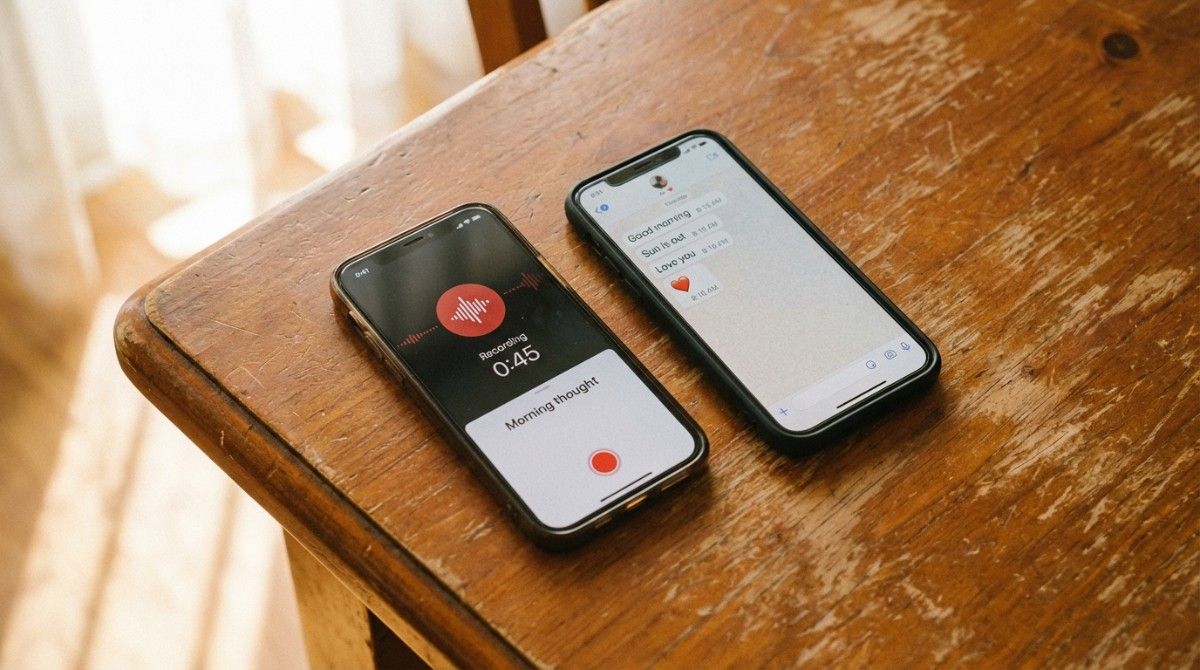
This is why the specific ritual matters less than its reliability. A nightly voice note, a morning text, a weekly virtual dinner - the form is less important than the fact that it happens, predictably, as promised.
🔑 Key Insight: Emotional intimacy is not built in grand gestures or long calls. It is built in the repeated, reliable experience of feeling known and received - which is entirely possible without physical presence, but requires more intentional architecture than proximity-based relationships demand.
What Happens If Emotional Intimacy Is Not Actively Built?
Physical absence without intentional emotional architecture creates a specific kind of drift.
The routine of daily communication may focus on exchanging information rather than creating meaningful moments together. If partners neglect to engage in activities that bring joy, laughter, and genuine connection - even remotely - the relationship can begin to feel monotonous and less fulfilling.
Two things happen simultaneously when this drift occurs. First, the emotional distance grows - partners stop feeling deeply known by each other and start feeling like they are performing closeness rather than experiencing it. Second, independent growth accelerates without being shared - creating two people who care about each other but are becoming strangers to each other's inner lives.
When partners are away from each other for extended periods, feelings may change, and partners may start drifting apart. The lack of physical intimacy can compound emotional distance, negatively affecting both the relationship and each person's personal wellbeing.
The critical distinction: this is not inevitable. It is the predictable outcome of separation without structure - and it is entirely preventable with intentional design.
The Attachment Dimension: Why Some LDR Couples Struggle More Than Others
Not all long-distance couples experience emotional intimacy challenges the same way. Attachment style is one of the most significant predictors of how well a couple navigates distance.
Attachment theory provides a useful lens for understanding satisfaction in long-distance relationships. Securely attached individuals typically show intimacy and resilience, while those with anxious, avoidant, or fearful-avoidant tendencies face greater challenges in regulating emotions and resolving conflict.
For anxiously attached individuals, physical absence can trigger hypervigilance - reading delayed replies as rejection, needing more reassurance than their partner can consistently provide across distance.
For avoidantly attached individuals, distance can initially feel comfortable - but often results in gradual emotional withdrawal that looks like independence but functions as disconnection.
Anxiously attached individuals reported suppressing their concerns to avoid seeming overly emotional, while fearful-avoidant individuals described withdrawing rather than expressing vulnerability - resulting in unmet emotional needs and communication breakdowns.
Understanding your own attachment patterns - and your partner's - is not just academically interesting. It is practically essential for knowing where your specific relationship is most vulnerable to intimacy loss at a distance.
A Quick Framework: 5 Ways to Build Emotional Intimacy Without Physical Touch
Step 1 - Shift from event-sharing to inner-life sharing Stop narrating what happened. Start narrating what it meant, how it felt, and what it is making you think about. This is the level at which emotional intimacy actually builds.
Step 2 - Practice responsive listening, not just active talking When your partner shares something emotionally real, resist the reflex to pivot to your own experience or to problem-solve. Name what you heard. Ask one follow-up question. Stay with it.
Step 3 - Build at least one reliable shared ritual weekly Virtual dinner. Simultaneous show. Morning voice notes. The specific form matters less than the reliability. This is what creates the felt sense of a shared life across distance.
Step 4 - Know your attachment patterns Understanding whether you tend toward anxiety or avoidance in separation helps you recognize when your reactions are about your own attachment system rather than your partner's behavior.
Step 5 - Name your growth to each other When you change - new realizations, shifting values, fears that surfaced this week - tell your partner. This is the most underused tool in long-distance emotional intimacy, and one of the most powerful.
Comparison: Proximity-Based vs. Long-Distance Intimacy Building
Intimacy Tool
Proximity-Based Couple
Long-Distance Couple
Physical touch
Daily, ambient, low-effort
Unavailable - requires substitution
Shared experience
Organic and frequent
Intentional and designed
Emotional disclosure
Often implicit or deferred
Must be explicit and verbal
Responsiveness
Visible in real time
Conveyed through message tone and follow-up
Ritual consistency
Often unconscious habit
Consciously built and protected
Attachment security
Reinforced through presence
Maintained through reliability and words
The core insight in this table: long-distance couples must do consciously what proximity-based couples often do unconsciously. This is harder, but it produces a more deliberate and often more articulate form of emotional closeness.
When NOT to Use This Framework
Do not use intimacy-building strategies as a performance. If you are sharing vulnerability because you think you should rather than because you feel safe enough to, the sharing will not produce the closeness you are looking for. Emotional intimacy follows genuine safety, not technique.
Do not force rituals that feel mechanical. A ritual that creates obligation rather than warmth is not building intimacy - it is adding pressure. If a weekly virtual dinner feels like homework, change the format before abandoning the intention.
Do not assume that high emotional intimacy means physical needs are met. For a relationship to truly thrive, both emotional and physical intimacy are needed. Emotional intimacy makes you feel seen and understood, while physical intimacy makes you feel wanted and connected. Acknowledge the physical dimension honestly rather than pretending emotional closeness fully replaces it.
Statistics & Research Insight
- A 2013 study in the Journal of Communication found that long-distance couples often experience higher levels of emotional intimacy, more meaningful communication, and deeper trust than geographically close couples
- An estimated 4 to 5 million couples in committed relationships in the United States alone are currently living apart
- A 2006 study found that approximately one-third of long-distance couples break up within three months of reuniting - suggesting that the transition back to physical proximity carries its own distinct challenges separate from maintaining connection at a distance
- Research shows that couples with high levels of emotional closeness experience greater partner satisfaction, improved communication, and reduced conflict - while relationships lacking emotional intimacy face increased conflict, diminished desire, and feelings of disconnection
- Research consistently shows that perceived partner responsiveness - feeling heard and emotionally validated - is a stronger predictor of LDR satisfaction than communication frequency alone

Final Takeaway
Physical touch is irreplaceable. No article should pretend otherwise.
But emotional intimacy - the deeper architecture of a relationship - is built through being genuinely known and genuinely responsive. And that does not require being in the same room.
Long-distance couples who build real emotional closeness do not succeed because they talk more. They succeed because they have learned to make their conversations count - through vulnerability, through curiosity about each other's inner lives, through rituals that create reliable closeness, and through the willingness to keep narrating who they are becoming.
The distance tests how much of the relationship exists in the words, the attention, and the intention. The couples who invest in those things build something that proximity alone often cannot.
Emotional Intimacy at a Distance Doesn't Build Itself
Reading about the psychology of long-distance connection is useful. Actually having the daily tools to build it is something else entirely.
Most long-distance couples are working hard - sending messages, scheduling calls, planning visits. What most are missing is a structured system for the layer of connection that matters most: the daily emotional depth that prevents drift and builds genuine closeness over time.
This is exactly what Flamme was built for.
Flamme is an AI-powered relationship ritual app designed to give couples - especially long-distance couples - a structured, daily way to go deeper than logistics. Not just "how was your day," but the kind of prompts and emotional check-ins that produce the felt sense of being truly known across any distance.
For long-distance couples specifically, Flamme offers:
- Daily conversation prompts designed to surface inner life, not just outer events - the exact layer of sharing that emotional intimacy research identifies as most powerful
- Long-distance bonding tools built to create shared moments and relationship momentum between visits
- AI relationship coaching that helps couples navigate the specific communication patterns that distance amplifies
Before diving in, the Type of Lovers quiz is worth a few minutes of your time. It maps your emotional connection style and communication patterns - giving you and your partner a shared language for understanding why certain distance dynamics feel the way they do.
The couples who build emotional intimacy across distance are not luckier. They are more deliberate.
👉 Download Flamme and grow closer every day
Frequently Asked Questions
Q1: How do long-distance couples build emotional intimacy without physical touch?
Long-distance couples build emotional intimacy through intentional self-disclosure (sharing inner experience, not just events), consistent ritual connection, perceived responsiveness (feeling genuinely heard), and creating shared experiences virtually. Research shows this deliberate approach can produce emotional closeness that exceeds what many proximity-based couples develop passively.
Q2: Can emotional intimacy replace physical intimacy in a long-distance relationship?
Not fully. Emotional and physical intimacy serve different needs. Emotional intimacy - feeling deeply known and seen - can absolutely be built across distance. Physical intimacy requires physical presence. Acknowledging both as distinct needs, rather than treating one as a substitute for the other, leads to healthier expectations and more honest communication in long-distance relationships.
Q3: Why do some long-distance couples actually grow closer despite the distance?
Research finds that physical absence forces intentionality. Couples who cannot rely on ambient presence have to communicate more deliberately - which accelerates emotional depth when channeled effectively. The absence of physical proximity removes a crutch that many proximity-based couples lean on in place of actual emotional communication.
Q4: What is the most important factor for emotional intimacy in long-distance relationships?
Perceived partner responsiveness - the feeling that when you share something real, your partner actually receives it and responds to it - is one of the strongest predictors of emotional intimacy and satisfaction in long-distance relationships. Frequency of contact matters less than the quality of emotional presence within each interaction.
Q5: How does attachment style affect long-distance relationships?
Securely attached individuals tend to navigate long-distance relationships with more resilience and emotional consistency. Anxiously attached individuals may struggle with hypervigilance around contact frequency. Avoidantly attached individuals may use distance as a comfortable withdrawal pattern. Understanding your attachment style helps you recognize when your reactions reflect your own internal patterns rather than what your partner is actually doing.